
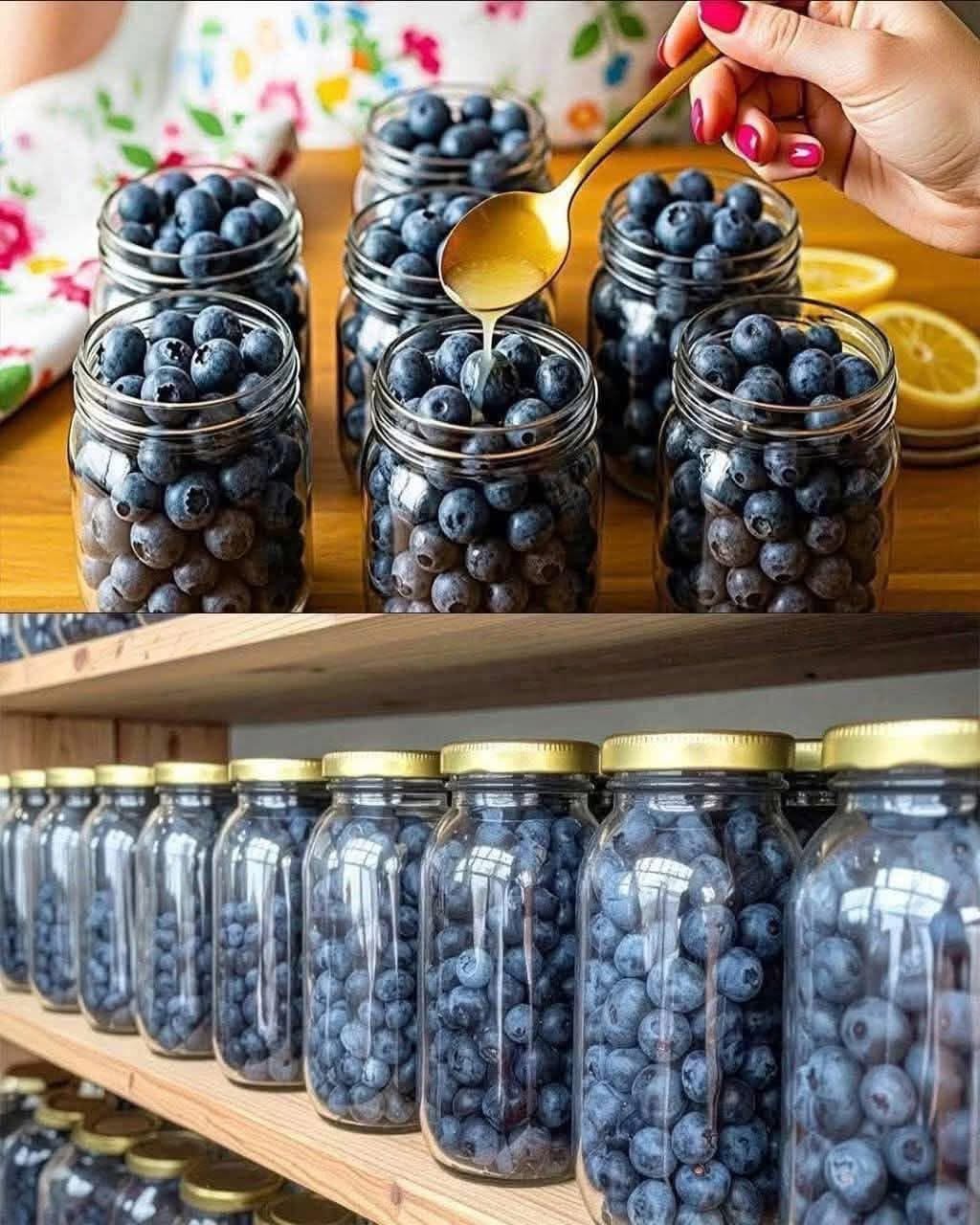
Description
Preserving fresh blueberries in glass jars is a practical way to enjoy their sweet, juicy flavor long after blueberry season has passed. With the right preparation and a tested home-canning method, you can store whole blueberries in jars for use in pies, muffins, pancakes, sauces, oatmeal, and other homemade recipes.
The most important part of this process is understanding that a sealed jar is not necessarily a safely preserved jar. Fresh blueberries should not simply be packed into glass jars and sealed at room temperature. For shelf-stable storage, the filled jars must be processed using a tested canning procedure, with the processing time adjusted for your altitude. The National Center for Home Food Preservation provides tested instructions for canning whole berries in a boiling-water canner. <Cite refs={[“turn806547search1″,”turn806547search6”]}/>
This guide explains how to prepare the berries, fill the jars, process them correctly, and check the seals afterward. If you prefer to preserve the berries without heating them in jars, freezing is another excellent option.
Can This Preservation Method Support Weight Loss Goals?
Plain canned blueberries can fit into a balanced eating routine because they provide fruit flavor and some fiber. When preserved without added sugar, they can also be used in recipes without adding the extra sugar found in sweetened fruit preparations.
However, blueberries are not a weight-loss product. Portion size and the ingredients served alongside them matter more than the preservation method itself.
For everyday use, preserve some jars without added sugar if you prefer a less-sweet option. Always follow a tested canning recipe for the actual processing procedure rather than changing ingredients in a way that could affect safety.
Does Preserved Blueberries Fit a High-Protein Lifestyle?
Blueberries contain a small amount of protein, but they are not a high-protein food. Their main contribution is fruit flavor, carbohydrates, and a little fiber.
Canned blueberries can complement protein-rich foods such as plain Greek yogurt, cottage cheese, oatmeal with added protein, or homemade protein pancakes. If you are following a low-carb eating plan, remember that blueberries naturally contain carbohydrates, even when no sugar is added.
My Personal Experience
- Preparing the berries carefully makes a difference.
Sorting out soft, damaged, or moldy fruit helps maintain the quality of the finished product. - Whole berries are versatile.
Preserving them whole gives you more flexibility for future recipes, from breakfast toppings to baked desserts. - Clear glass jars make storage easy to organize.
Once the jars have cooled and their seals have been checked, labeling them with the date helps you use older jars first. - The right method matters more than the lid popping.
A vacuum seal shows that the lid has attached, but only the correct tested processing procedure establishes whether the food is safe for room-temperature storage.
Perfect For
- Seasonal fruit preservation
- Homemade pantry supplies
- Blueberry pies and muffins
- Pancakes, waffles, and oatmeal
- Homemade fruit sauces
- Dessert toppings
- Reducing seasonal food waste
- Preparing ingredients ahead of time
- Sugar-free fruit preparations when using an approved tested recipe
Why You’ll Love This Method
- Enjoy blueberries beyond the season.
Properly canned berries can be stored for later use without taking up freezer space. - Keep the berries ready for recipes.
Open a jar when you need fruit for baking, sauces, or breakfast. - Choose an appropriate packing liquid.
Tested whole-berry canning instructions allow options such as water, juice, or syrup, depending on the recipe. <Cite refs={[“turn806547search1″,”turn806547search6”]}/> - Make use of firm, ripe fruit.
Fresh, sound berries are the best starting point for a good-quality preserved product. - Organize your pantry.
Labeled jars make it easier to track preparation dates and rotate stored food.
Common Mistakes to Avoid
- Sealing raw blueberries without processing them.
Filling jars and tightening the lids does not make the contents shelf-stable. Use a tested canning method. - Ignoring altitude.
Water boils at a lower temperature at higher elevations, so the processing time must be adjusted according to the tested recipe. - Using damaged fruit.
Remove berries that are moldy, rotten, or badly damaged before preparation. - Using ordinary decorative jars.
Choose jars designed for home canning and compatible lids, not decorative glass jars intended only for display. - Overfilling the jars.
Leave the headspace specified in the tested recipe so the contents can expand during processing and a proper seal can form. - Assuming a sealed lid guarantees safety.
A lid may seal even when food has been processed incorrectly. Follow the full recipe and processing schedule.
Required Equipment
- Fresh blueberries — provide the main ingredient for preservation.
- Home-canning jars — withstand the temperature changes associated with proper canning.
- New compatible canning lids — provide the sealing surface required by the jar system.
- Jar bands — hold the lids in place during processing.
- Large boiling-water canner with a rack — keeps jars off the bottom and allows water to circulate around them.
- Jar lifter — helps remove hot jars safely.
- Wide-mouth funnel — makes filling jars easier and cleaner.
- Clean spoon or bubble remover — helps remove trapped air when appropriate.
- Kitchen towel and labels — support safe cooling, inspection, and storage organization.
Storage Instructions
- Before processing: Keep freshly washed berries refrigerated if you are not ready to preserve them.
- After processing: Leave the jars undisturbed for 12–24 hours while they cool.
- Check the seal: Inspect each cooled jar according to the canning instructions. A sealed lid alone does not prove that the food was processed safely.
- Store correctly processed jars: Keep them in a cool, dark, dry place, away from direct sunlight and temperature extremes.
- Use good stock rotation: For best quality, aim to use properly canned fruit within about a year.
- Unsealed jars: Refrigerate and use promptly, or reprocess according to a tested procedure within the recommended time.
- When in doubt, discard: Never taste food to determine whether it is safe. Discard jars with signs of spoilage, leakage, or an abnormal odor without tasting the contents.
The National Center for Home Food Preservation provides additional guidance on cooling, checking seals, and storing home-canned foods. <Cite refs={[“turn806547search6″,”turn806547search9”]}/>
Recipe Details
- Prep Time: 20 minutes
- Processing Time: Depends on jar size, packing method, and altitude
- Cooling Time: 12–24 hours
- Total Time: Approximately 2–3 hours, depending on batch size
- Yield: Depends on the quantity of blueberries and jar sizes
- Difficulty: Moderate
- Category: Food preservation
- Method: Tested boiling-water canning
- Storage: Pantry storage only after correct processing and seal checks
Short Description
Preserve fresh blueberries in glass jars using a tested home-canning procedure. Carefully sort the berries, pack them with an approved liquid, leave the correct headspace, and process the jars for the time specified for your altitude.
Ingredients
For a small batch, gather:
- Fresh, firm, ripe blueberries
- Clean water, juice, or prepared syrup, as permitted by the tested recipe
- Home-canning jars and compatible lids
The quantity of liquid and berries depends on your jar size and packing method. The tested whole-berry canning instructions specify the preparation and filling procedure; follow those instructions rather than improvising proportions. <Cite refs={[“turn806547search1″,”turn806547search6”]}/>
Step-by-Step Instructions
Step 1: Select and Sort the Blueberries
Choose fresh, ripe, firm blueberries. Remove stems, leaves, crushed berries, and fruit showing mold or decay.
Step 2: Wash the Berries
Rinse the blueberries under clean running water and drain them thoroughly. Avoid soaking them for long periods.
Step 3: Prepare the Canning Equipment
Use glass jars specifically intended for home canning. Wash the jars and prepare the lids and bands according to the manufacturer’s instructions and the tested recipe.
Set up a boiling-water canner with its rack. The canner must be deep enough to keep the required layer of boiling water above the jar tops throughout processing. <Cite refs={[“turn806547search2″,”turn806547search6”]}/>
Step 4: Choose the Tested Packing Method
The National Center for Home Food Preservation provides both raw-pack and hot-pack methods for whole berries.
- Raw pack: Put prepared raw berries into jars, then cover them with boiling water, juice, or syrup as specified in the recipe.
- Hot pack: Heat the berries in boiling water briefly, drain as directed, and cover them with hot liquid.
For the specific whole-berry recipe, follow the exact filling directions and leave ½ inch of headspace. <Cite refs={[“turn806547search1″,”turn806547search6”]}/>
Step 5: Remove Trapped Air and Clean the Rims
Follow the tested recipe’s instructions for removing air bubbles. Wipe the jar rims with a clean, damp cloth or paper towel so that food residue does not interfere with the seal.
Fit the lids and bands according to the manufacturer’s directions. Do not overtighten them.
Step 6: Process the Jars in a Boiling-Water Canner
Place the filled jars on the canner rack. Add water as required by the canner instructions, ensuring the jars are covered by the required amount of water.
Bring the canner to a full boil, then start timing the process using the correct schedule for the packing method, jar size, and altitude. Maintain the boil throughout the entire processing time. If the boil stops, follow the tested guidance for restarting the timing. <Cite refs={[“turn806547search2″,”turn806547search6”]}/>
Important: Do not use a generic processing time for every jar or location. Consult the official whole-berry canning schedule and adjust for your elevation before starting. The schedule differs for raw and hot packs, as well as pint and quart jars. <Cite refs={[“turn806547search1″,”turn806547search6”]}/>
Step 7: Remove the Jars Safely
At the end of processing, turn off the heat and follow the canner’s instructions for removing the lid and waiting period. Use a jar lifter to remove the jars.
Place them upright on a towel, leaving space between jars. Do not tighten the bands or press the lids while they cool.
Step 8: Check the Seals
Let the jars cool undisturbed for 12–24 hours. Then check each lid according to the canning guidance.
A properly sealed lid should remain firmly attached. If a jar has not sealed, do not store it in the pantry. Refrigerate it for prompt use or reprocess it using the recommended procedure and a suitable lid.
Step 9: Label and Store
Label the jars with the contents and date. Store only correctly processed, sealed jars in a cool, dark place.
Use the blueberries in baked goods, fruit sauces, pancakes, and other recipes. Once a jar is opened, refrigerate the contents and use them promptly.
Approximate Nutrition Information
Nutrition varies with the amount of fruit, the packing liquid, and whether sugar syrup is used. The estimates below describe approximately ½ cup of blueberries packed in water with no added sugar; they are not laboratory-tested values.
| Nutrient | Approximate Amount |
|---|---|
| Calories | 42 kcal |
| Total Fat | 0.2 g |
| Saturated Fat | 0 g |
| Cholesterol | 0 mg |
| Sodium | 1 mg |
| Potassium | 55 mg |
| Total Carbohydrates | 11 g |
| Dietary Fiber | 2 g |
| Net Carbohydrates | 9 g |
| Total Sugars | 7 g |
| Protein | 0.5 g |
| Calcium | 4 mg |
Adding sugar syrup will increase the carbohydrate and calorie content.
Helpful Notes
- Use a tested recipe: Do not substitute an untested sealing method for the prescribed canning process.
- Check your elevation: Processing times increase at higher elevations because boiling-water temperatures are lower.
- Avoid improvised oven canning: Heating jars in an oven is not a recommended substitute for a tested canning method.
- Do not rely on a hot-fill seal: Hot berries poured into jars and sealed without the required processing are not safely preserved for room-temperature storage.
- Choose freezing if you want the simplest option: For berries intended mainly for smoothies or baking, freezing is straightforward and preserves much of their fresh flavor.
- Keep the jar rims clean: Food particles around the sealing surface can prevent a proper seal.
- Never taste suspicious canned food: When in doubt, discard it safely.
Frequently Asked Questions
1. Can I simply put fresh blueberries in a glass jar and seal it?
No. A tightly closed lid does not make fresh berries shelf-stable. For room-temperature storage, use a tested canning recipe and process the jars correctly. Otherwise, keep the berries refrigerated for short-term storage or freeze them.
2. Can I preserve blueberries without adding sugar?
Yes. The tested whole-berry canning method permits packing options that do not require sugar syrup, including water. Follow the exact tested procedure and processing schedule. <Cite refs={[“turn806547search1″,”turn806547search6”]}/>
3. Do I need a pressure canner for blueberries?
The National Center for Home Food Preservation provides a tested boiling-water canning method for whole berries. Follow that method rather than adapting pressure-canning instructions from an unrelated food. <Cite refs={[“turn806547search1″,”turn806547search2”]}/>
4. How long should I process blueberry jars?
The correct time depends on whether you use raw pack or hot pack, the size of the jars, and your altitude. Consult the official whole-berry processing table before canning; do not assume one time is suitable for every location. <Cite refs={[“turn806547search1″,”turn806547search6”]}/>
5. Why do some blueberries float in the jar?
Air trapped inside the berries can make them float, and fruit may also rise during processing. The tested hot-pack method can help reduce trapped air, although some floating may still occur. <Cite refs={[“turn806547search5″,”turn806547search6”]}/>
6. How long can properly canned blueberries be stored?
For best quality, use correctly processed jars within about a year. Store them in a cool, dark place and inspect the jars before use. Discard anything with signs of spoilage or a compromised seal.
7. What should I do if a jar does not seal?
Do not store it at room temperature. Refrigerate the contents for prompt use or reprocess them according to a tested procedure within the recommended time, using a suitable lid.
8. Can I use ordinary decorative glass jars?
Use jars designed for home canning and compatible lids. Decorative jars may not withstand the heat or create a reliable seal.
9. Can I preserve blueberries in a jar without liquid?
Do not improvise a dry-pack or vacuum-sealing method for shelf-stable blueberries. Use the tested whole-berry recipe and its specified packing liquid. If you want to keep berries dry, freezing them is the better option.
10. Is freezing safer or easier than canning?
For most home cooks, freezing is the simpler choice because it does not require a canning process or a shelf-stable seal. If you specifically want pantry storage, follow the tested canning procedure carefully.