
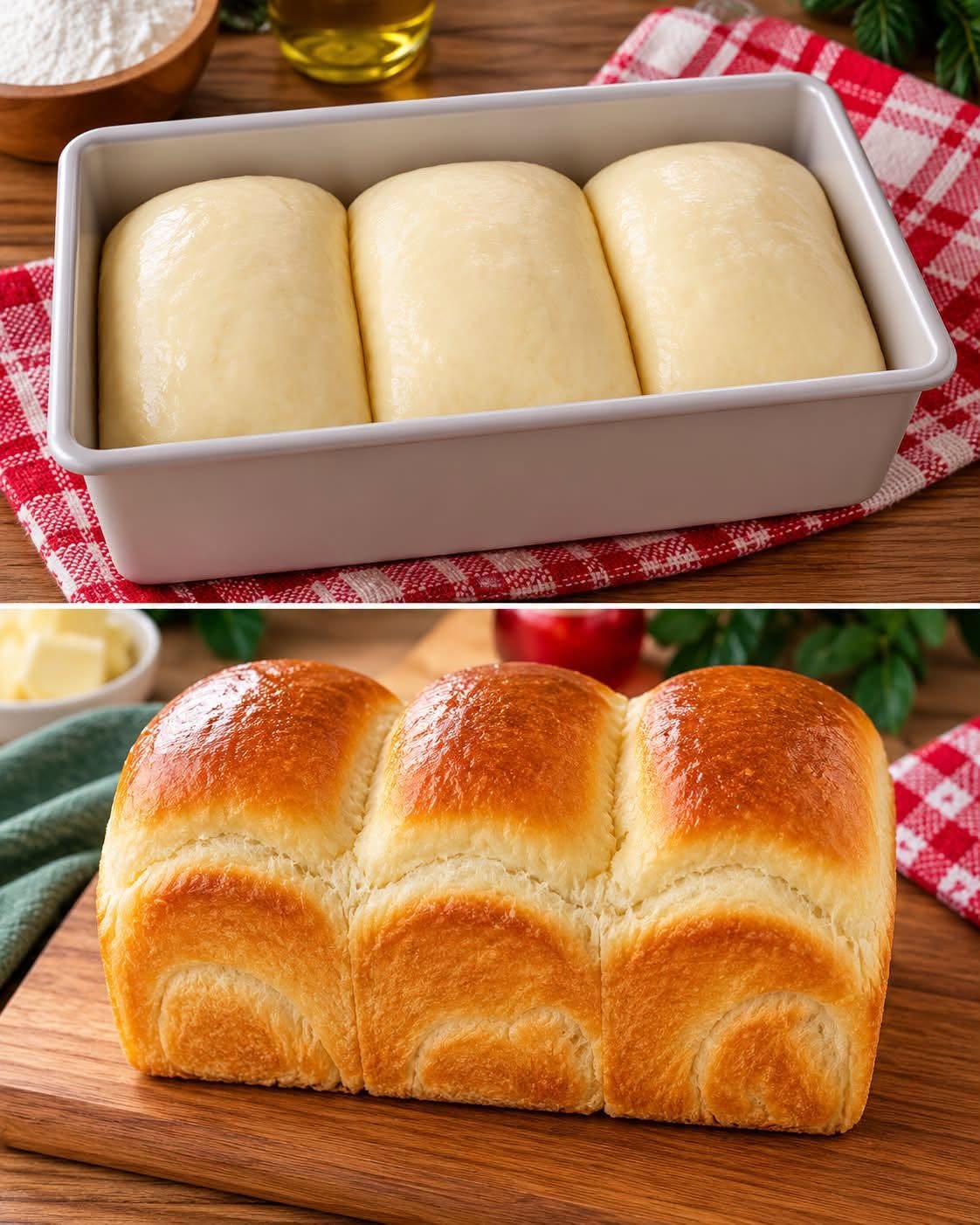
-
Prep Time: 25 minutes
-
Cook Time: 30–35 minutes
-
Proofing & Resting Time: 2 hours 15 minutes
-
Total Time: ~3 hours 10 minutes
-
Yield: 1 loaf (8–10 thick slices / 8×4 or 9×5 inch loaf pan)
-
Cooking Intensity Level: Medium (Requires dough kneading, temperature-controlled proofing, and precise baking)
Heat & Kneading Intensity Guide
Achieving the perfect texture requires controlling two key elements: kneading intensity (to build strong gluten networks) and heat intensity (to gelatinize starches during Tangzhong prep and evenly bake the loaf).
-
Tangzhong Phase (Medium-Low Heat): Gentle heat is required to cook the flour-milk mixture without scorching. It should form a smooth, paste-like gelatinized roux (around 150°F / 65°C).
-
First Proofing Phase (Warm Ambient Environment – ~80°F / 27°C): Low-intensity ambient heat allows the yeast to ferment steadily without producing harsh alcoholic off-flavors.
-
Kneading Intensity (Low to High Speed): Starts slow to incorporate dry and wet ingredients, then shifts to medium-high speed for 10–12 minutes until the dough passes the windowpane test (stretching thin without tearing).
-
Baking Phase (Moderate Heat – 350°F / 175°C): Ensures the dense, rich dough bakes through to an internal temperature of 190°F–200°F (88°C–93°C) while producing a golden, tender crust.
Ingredients
1. The Tangzhong (Roux Starter):
-
Whole Milk: 60ml (1/4 cup)
-
Water: 60ml (1/4 cup)
-
Bread Flour: 20g (2 tbsp)
2. The Main Dough:
-
Bread Flour: 350g (approx. 2 3/4 cups) — high protein content is essential for structure
-
Granulated Sugar: 40g (3 tbsp)
-
Instant Dry Yeast: 7g (1 packet / 2 1/4 tsp)
-
Fine Sea Salt: 5g (1 tsp)
-
Whole Milk (Warm, ~105°F / 40°C): 120ml (1/2 cup)
-
Large Egg (Room Temperature): 1 egg (whisked)
-
Unsalted Butter (Softened): 40g (3 tbsp), room temperature
-
All Tangzhong Mixture: (Prepared ahead and cooled slightly)
3. Egg Wash (For Shine):
-
Egg: 1 large egg
-
Whole Milk or Cream: 1 tbsp
Step-by-Step Instructions
Step 1: Make the Tangzhong Starter
-
In a small saucepan over medium-low heat, whisk together 60ml milk, 60ml water, and 20g bread flour until completely smooth with no lumps.
-
Cook continuously for 2 to 3 minutes, stirring constantly with a whisk or spatula.
-
Once the mixture thickens into a glossy, pudding-like paste that leaves lines when whisked, remove it from the heat.
-
Transfer to a small bowl and let cool to room temperature (about 10–15 minutes).
Step 2: Mix and Knead the Dough
-
In the bowl of a stand mixer fitted with a dough hook attachment, combine the 350g bread flour, sugar, instant yeast, and salt. (Keep the salt and yeast on opposite sides of the bowl initially, as direct contact can retard yeast activity).
-
Add the warm milk (120ml), whisked egg, and cooled Tangzhong mixture.
-
Turn the mixer on low speed for 2 to 3 minutes until a shaggy dough forms and no dry flour remains.
-
Add the softened butter one tablespoon at a time.
-
Increase the speed to medium-high and knead for 10 to 12 minutes. The dough will start off sticky, but will transform into a smooth, elastic, and slightly tacky ball that pulls away cleanly from the sides of the bowl.
-
The Windowpane Test: Pinch off a golf-ball-sized piece of dough and gently stretch it with your fingers. If you can stretch it thin enough to see light pass through without it tearing easily, the gluten structure is fully developed.
Step 3: First Proofing
-
Shape the dough into a smooth ball.
-
Lightly grease a large bowl with neutral oil, place the dough inside, and turn it once to coat.
-
Cover the bowl tightly with plastic wrap or a damp kitchen towel.
-
Place in a warm, draft-free place for 60 to 75 minutes, or until doubled in size.
Step 4: Divide, Shape, and Roll
-
Punch down the risen dough gently to release built-up carbon dioxide gas.
-
Turn the dough out onto a lightly floured surface and divide it into 3 equal pieces (approx. 210g each).
-
Shape each portion into a smooth ball, cover loosely, and let rest for 15 minutes (bench rest).
-
Shaping the Swirls:
-
Take one dough ball and roll it out with a rolling pin into an oval shape about 10–12 inches long.
-
Fold the top third down into the center, and the bottom third up (like folding a business letter).
-
Turn the folded dough 90 degrees and roll it out flat again into a long rectangle.
-
Tightly roll the dough up from the short edge into a neat cylinder.
-
Repeat with the remaining two dough balls.
-
Step 5: Second Proofing
-
Grease an 8×4-inch or 9×5-inch loaf pan generously with butter or cooking spray.
-
Place the 3 rolled dough cylinders side-by-side along the length of the pan.
-
Cover loosely with a damp towel and let proof in a warm spot for 45 to 60 minutes, or until the tops of the rolls rise about 1 inch above the rim of the pan.
Step 6: Baking
-
Preheat your oven to 350°F (175°C).
-
Whisk 1 egg with 1 tbsp of milk to create the egg wash. Brush the tops of the risen dough gently with a thin layer of egg wash.
-
Bake on the center rack for 30 to 35 minutes.
-
Check at the 20-minute mark: if the top is turning dark brown too quickly, loosely tent a sheet of aluminum foil over the loaf pan.
-
The bread is done when the crust is golden brown and an instant-read thermometer inserted into the center reaches 190°F–200°F (88°C–93°C).
Step 7: Cooling
-
Remove from the oven and let the bread cool in the pan for 10 minutes.
-
Carefully run a knife along the edges and transfer the loaf onto a wire cooling rack to cool completely. (Allowing it to cool completely before slicing prevents the interior from becoming gummy).
Baker’s Secrets for Success
-
Use Bread Flour: High-protein bread flour (12%–14% protein content) is critical for creating the strong gluten network required to support the tall, airy structure.
-
Don’t Rush the Proofing: Temperature affects rise times. If your kitchen is cool, proofing may take longer. Look for volume changes rather than strictly following the clock.
-
Store Properly: Keep wrapped tightly in plastic wrap or a bread bag at room temperature for up to 5 days. Do not refrigerate, as cold temperatures cause bread to stale faster.
Complete Nutritional Information
(Calculated per serving based on 10 slices per loaf)
| Nutrient | Amount per Slice | % Daily Value* |
| Calories | 215 kcal | — |
| Total Fat | 5.5g | 7% |
| Saturated Fat | 3.0g | 15% |
| Trans Fat | 0.0g | — |
| Cholesterol | 38mg | 13% |
| Sodium | 220mg | 10% |
| Total Carbohydrates | 34g | 12% |
| Dietary Fiber | 1.2g | 4% |
| Total Sugars | 5.5g | — |
| (Includes Added Sugars) | (4.0g) | (8%) |
| Protein | 6.5g | 13% |
| Vitamin D | 0.4mcg | 2% |
| Calcium | 45mg | 4% |
| Iron | 1.8mg | 10% |
| Potassium | 85mg | 2% |