
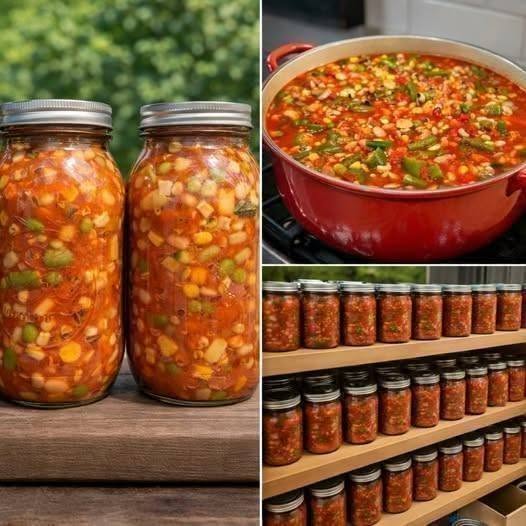
Description
Home-canned vegetable soup is a comforting way to enjoy the flavors of carrots, potatoes, green beans, tomatoes, corn, and peas throughout the year. This colorful soup has a savory broth, tender vegetables, and a naturally hearty texture that makes it a versatile lunch or dinner option. It is budget-friendly, easy to customize for everyday meals, and can be served as a light starter or paired with a protein-rich side. For a high-protein meal, add cooked chicken, beans, or lentils when serving. The basic vegetable soup is not automatically low-carb, but you can adapt your bowl with fewer starchy vegetables and more low-carb options.
Important home-canning safety note: This is a recipe concept for preparing vegetable soup, plus a safe-canning framework. Vegetable soup is a low-acid food and must be pressure-canned using tested directions. Do not use a boiling-water bath, and do not assume that any homemade combination of ingredients is safe for shelf storage. Follow the official National Center for Home Food Preservation soup instructions and its guidance for each vegetable. Never improvise jar proportions or processing instructions.
Can This Home-Canned Vegetable Soup Support Weight Loss Goals?
Vegetable soup can fit into a balanced eating plan because it provides volume, fluid, and a variety of vegetables without needing a creamy or butter-heavy base. Carrots, green beans, tomatoes, and other vegetables contribute fiber and nutrients, while a broth-based recipe can be relatively light in calories. To make it more filling, serve it with cooked chicken, lean turkey, or an appropriate portion of beans when you open the jar. Use measured portions of potatoes and corn if you are monitoring carbohydrate intake. No single food guarantees weight loss; overall eating patterns and portion sizes matter.
Does Home-Canned Vegetable Soup Fit a High-Protein Lifestyle?
The basic vegetable soup is nutritious but is not especially high in protein when made only with vegetables and broth.
Carrots, tomatoes, green beans, and other vegetables contribute fiber and micronutrients, while potatoes and corn increase the carbohydrate content.
For more protein, add cooked chicken, beans, or lentils when reheating the soup for immediate serving.
A lower-carb bowl can emphasize green beans, zucchini, celery, and leafy vegetables instead of larger amounts of potatoes and corn.
For home canning, however, use only tested ingredient preparations and official pressure-canning instructions; make protein additions after opening unless following a tested canning formula.
My Personal Experience
These points describe the expected qualities of the recipe, not a claim of personal kitchen testing.
- Fresh, garden-inspired flavor: Carrots, tomatoes, green beans, and herbs create a balanced, savory broth.
Simmering the soup before serving helps the vegetable flavors blend together. - A colorful, inviting bowl: The different vegetables bring varied colors and textures to the soup.
Cutting the vegetables into similarly sized pieces helps them cook more evenly. - Convenient pantry meals: Properly pressure-canned soup can be a useful pantry option when prepared according to tested safety guidance.
It offers a quick starting point for lunch or dinner when you want a warm, vegetable-rich meal. - Easy to adapt when serving: You can add cooked chicken, beans, fresh herbs, or spices after opening the jar.
This lets you adjust protein, flavor, and texture without changing the tested canning formula.
Perfect For
- Everyday family meals: Serve a warm bowl of vegetable soup with bread or a protein-rich side.
- Meal planning: Properly canned jars can make meal preparation more convenient when processed and stored safely.
- Garden harvests: Use vegetables prepared according to tested canning recommendations to make the most of seasonal produce.
- Light lunches: A broth-based soup can be a lighter meal, especially when paired with a filling protein source.
- High-protein meals: Add cooked chicken, lean turkey, or suitable beans after opening and reheating.
- Low-carb eating: Emphasize low-carb vegetables and reduce potatoes and corn in a freshly cooked version.
- Cold-weather comfort food: Warm broth and tender vegetables make a satisfying meal during cooler months.
- Budget-friendly cooking: Common vegetables and broth make this a practical option for home cooks.
Why You’ll Love This Recipe
- Simple, familiar ingredients: Carrots, celery, green beans, tomatoes, and broth create a classic vegetable soup flavor.
The recipe is flexible for everyday cooking, provided canning ingredients are prepared according to tested directions. - A lighter broth-based option: The soup does not need cream or a heavy sauce to taste satisfying.
Herbs, garlic, onion, and black pepper add depth while keeping the broth fresh and savory. - Easy to personalize after opening: Add cooked chicken, fresh parsley, or extra seasoning when reheating a jar.
These finishing touches make it easy to vary the meal without changing the preserved product. - Useful for pantry planning: Properly processed jars can provide a convenient meal component.
Use tested pressure-canning instructions and inspect each jar before opening. - Suitable for different meal styles: Serve it as a starter, a light lunch, or a side dish.
Add protein when serving if you want a more substantial high-protein meal.
Common Mistakes to Avoid
- Using a boiling-water bath: Low-acid vegetable soup requires pressure canning according to tested guidance. A boiling-water bath is not a safe substitute.
- Improvising the vegetable mixture: Not every vegetable or combination has a tested canning recommendation. Use vegetables that have separate tested instructions and follow the official soup procedure.
- Adding thickening ingredients before canning: Do not add flour, cornstarch, cream, milk, rice, or pasta to soup intended for home canning. These can interfere with heat penetration; add suitable extras after opening when preparing the soup for a meal.
- Guessing the pressure or processing time: Safe processing depends on jar size, canner type, altitude, and the tested recipe. Consult the official instructions and adjust pressure for your elevation.
Required Equipment
- Large stockpot — Provides space to prepare the vegetables and bring the soup mixture to a boil.
- Chef’s knife — Helps cut vegetables into even pieces for consistent cooking.
- Cutting board — Provides a stable surface for vegetable preparation.
- Measuring cups and spoons — Help keep recipe quantities consistent.
- Colander — Makes washing and draining vegetables easier.
- Pressure canner — Provides the processing conditions required for safely canning low-acid vegetable soup; an ordinary pressure cooker is not automatically an approved substitute.
- Approved canning jars and lids — Designed for home canning when used according to the manufacturer’s instructions.
- Jar lifter and canning funnel — Help handle hot jars and fill them with less mess.
- Clean kitchen towels — Provide a suitable surface for jars to cool undisturbed after processing.
Storage Instructions
Properly pressure-canned jars
- Before storing: After processing, allow jars to cool undisturbed for 12–24 hours. Check the seals, remove screw bands if appropriate, clean the jars, and label them with the contents and date.
- Pantry storage: Store sealed jars in a cool, dark, dry location. For best quality, use home-canned foods within about one year, while always following current food-preservation guidance.
- Inspect before opening: Do not use jars with broken seals, leaks, bulging lids, spurting liquid, or other signs of spoilage. Never taste food to decide whether it is safe.
- After opening: Refrigerate the soup promptly in a clean, covered container and use within 3–4 days. Reheat only the portion you plan to eat.
Freshly cooked soup
- Refrigerator: Store in a clean, airtight container for 3–4 days at 40°F (4°C) or below.
- Freezer: Freeze in freezer-safe containers, leaving room for expansion, for about 2–3 months for best quality.
- Reheating: Warm on the stovetop over medium-low heat, stirring occasionally, until steaming hot throughout. For leftovers, reheat to 165°F (74°C).
Important: Refrigeration or freezing instructions for freshly cooked soup are separate from shelf-stable home canning. Never store an unprocessed jar of vegetable soup at room temperature.
Recipe Details
- Preparation Time: 25 minutes
- Cooking Time: 30 minutes for the soup mixture; pressure-canning time is additional
- Total Time: Approximately 55 minutes for preparing the soup mixture, plus the full canning process and cooling time
- Servings: Approximately 8 bowls, depending on portion size
- Best Season for This Recipe: All-season, especially when garden vegetables are abundant
- Total Calories (Per Serving): Approximately 120 calories for a vegetable-only bowl
Calories and timings are estimates for the soup mixture, not a guarantee of yield or a complete canning schedule. Actual values depend on the vegetables, quantities, and broth used.
Short 3-Line Description
Home-canned vegetable soup brings together tender vegetables in a light, savory broth for a comforting homemade meal.
Enjoy it on its own or add cooked chicken or beans after opening for a more protein-rich bowl.
For shelf storage, follow tested pressure-canning instructions exactly; do not improvise the canning process.
📝 Ingredients
The following quantities make a freshly cooked vegetable soup for approximately 8 servings. They are not, by themselves, a validated formula for shelf-stable canning.
- 1 tablespoon olive oil — Optional for sautéing the aromatics when making soup for immediate eating.
- 1 medium onion, diced — Adds a savory base.
- 2 cloves garlic, minced — Provides aromatic flavor.
- 3 medium carrots, diced — Add color, mild sweetness, and texture.
- 2 celery stalks, diced — Bring a fresh, savory flavor.
- 2 cups green beans, trimmed and cut into 1-inch pieces — Add a tender-crisp vegetable texture.
- 2 medium potatoes, peeled and diced — Add body and make the soup more filling; they also contribute carbohydrates.
- 1 cup corn kernels — Add sweetness and texture; omit or reduce for a lower-carb freshly cooked version.
- 1 cup peas — Add color and a little plant protein.
- 1 can (14.5 ounces / 411 g) diced tomatoes — Adds acidity and rich tomato flavor; it does not make the entire soup safe for water-bath canning.
- 6 cups (1.4 liters) low-sodium vegetable broth — Forms the soup’s base; check the label for allergens.
- 1 teaspoon dried thyme — Adds a gentle herbal note.
- 1 teaspoon dried oregano — Complements the vegetables and tomato.
- 1/2 teaspoon black pepper — Adds mild warmth.
- Salt, to taste — Adjust for the broth’s sodium level.
- 2 tablespoons chopped fresh parsley, optional — Adds freshness when serving.
For a high-protein bowl when serving: Add approximately 3–4 ounces (85–115 g) of cooked, shredded chicken per person, or a suitable serving of cooked beans. Add these to freshly cooked soup or to a jar of canned soup after opening and reheating. Do not assume these additions are safe to include in jars unless following a tested canning recipe.
Directions
A. Prepare the soup for immediate eating
- Prepare the vegetables — 10 minutes.
Wash the vegetables and dice them into similar-sized pieces. Trim the green beans and mince the garlic. Evenly cut vegetables cook more consistently and are easier to eat with a spoon. - Sauté the aromatics — 3–4 minutes.
Heat the olive oil in a large stockpot over medium heat. Add the onion and celery, stirring until the onion begins to soften. Add the garlic and cook for about 30 seconds until fragrant. - Add the firm vegetables — 3 minutes.
Stir in the carrots, green beans, and potatoes. Cook briefly, stirring so the vegetables are lightly coated with the aromatics. - Add the broth and remaining vegetables — 2 minutes.
Pour in the broth, then add the diced tomatoes, corn, peas, thyme, oregano, and black pepper. Stir gently to distribute the ingredients. - Bring to a boil — 5–8 minutes.
Increase the heat to medium-high until the liquid reaches a boil. Reduce to medium-low so the soup simmers gently rather than boiling vigorously. - Simmer until tender — 15–20 minutes.
Cook until the carrots and potatoes can be pierced easily with a fork and the green beans are tender. The broth should be aromatic, and the vegetables should hold their shape rather than fall apart. - Season and serve — 2 minutes.
Taste and add salt as needed. Stir in the parsley. For a high-protein meal, add cooked chicken or beans and heat until hot throughout.
B. If you intend to home-can vegetable soup
- Use tested canning guidance before filling jars.
Select and prepare each vegetable according to its tested home-canning instructions. Do not assume the freshly cooked recipe above is a safe shelf-stable canning formula. - Follow the official soup procedure exactly.
The National Center for Home Food Preservation directs users to combine properly prepared solids with broth, tomatoes, or water to cover, boil for 5 minutes, and fill jars halfway with solids before adding liquid. Leave 1 inch of headspace. Do not thicken the soup or add noodles, rice, flour, cream, or milk before canning. - Pressure-process according to the official schedule.
Use an appropriate pressure canner and follow the required processing time and pressure for your jar size, canner type, and altitude. The official instructions list 60 minutes for pints and 75 minutes for quarts for standard soup mixtures, with pressure adjusted for elevation and a longer process for seafood-containing soup. Check the full official chart before proceeding: NCHFP — Soups. - Cool, check, and store safely.
Let the canner depressurize naturally according to its instructions. Remove jars carefully and cool them undisturbed for 12–24 hours. Check the seals before labeling and storing. If you cannot follow a tested procedure precisely, refrigerate or freeze the soup instead of storing it at room temperature.
Nutrition Facts (Per Serving – Approximate)
Estimated for one of eight servings of the freshly cooked vegetable-only soup above. Values vary with the specific vegetables, broth, oil, and portion size.
- Calories: 120 kcal
- Total Fat: 3 g
- Cholesterol: 0 mg
- Sodium: 350 mg
- Potassium: 650 mg
- Total Carbohydrates: 22 g
- Fiber: 5 g
- Net Carbs: 17 g
- Sugars: 6 g
- Protein: 4 g
- Calcium: 55 mg
Net carbs are estimated by subtracting fiber from total carbohydrates. These are general estimates, not laboratory-tested values. Adding chicken, beans, or other protein sources changes the nutrition per serving. This vegetable-only version is not especially high in protein, and the potatoes, corn, peas, and carrots contribute carbohydrates.
Notes
- Canning safety: Use an approved pressure canner and a current, tested canning procedure. Do not use a water-bath canner for low-acid vegetable soup.
- Do not thicken before canning: Add pasta, rice, flour, cream, milk, or other thickening ingredients only after opening, when preparing the soup to eat.
- High-protein boost: Add cooked chicken, turkey, or suitable beans after opening and reheating, or to freshly cooked soup.
- Lower-carb option: For freshly cooked soup, use more green beans, zucchini, celery, and leafy vegetables and less potato, corn, and peas. Do not use these substitutions in a canning batch unless they are allowed by tested instructions.
- Allergy notes: Check broth and packaged ingredients for allergens, including celery and any added flavorings.
- Flavor boosts: Fresh parsley, black pepper, thyme, oregano, or a squeeze of lemon added at serving time can brighten the broth.
- Storage distinction: Fresh soup can be refrigerated or frozen; shelf-stable jars require correct pressure processing and seal checks.
Frequently Asked Questions
1. Can I use a water-bath canner for home-canned vegetable soup?
No, vegetable soup is a low-acid food and requires a tested pressure-canning process to control the risk of botulism.
2. How long should vegetable soup be pressure-canned?
The official soup guidance lists 60 minutes for pint jars and 75 minutes for quart jars, but the required pressure depends on the canner type and altitude, so check the full tested instructions.
3. Can I add chicken or beans to the soup before canning?
Only use meat or beans prepared according to tested canning guidance and follow the official soup procedure rather than improvising ingredient proportions.
4. Can I add pasta, rice, or cream before canning?
No, these ingredients should be added after opening because they are not recommended in the tested home-canned soup procedure.
5. How can I make vegetable soup higher in protein?
Add cooked chicken, turkey, or suitable beans when reheating the soup for immediate serving.
6. Is home-canned vegetable soup low-carb?
Not necessarily, because ingredients such as potatoes, corn, peas, and carrots contribute carbohydrates, although a freshly cooked version can be adjusted to suit individual preferences.