
Description
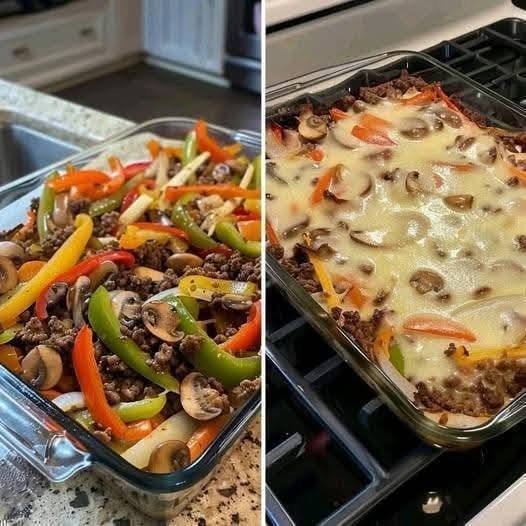
This Philly Cheesesteak Casserole brings all the classic flavors of a Philadelphia cheesesteak into one warm, cheesy, satisfying dish. Tender slices of beef, sweet bell peppers, savory onions, and melted provolone cheese come together in a rich, flavorful casserole that makes every bite comforting and delicious. It’s an easy dinner option for busy weeknights when you want the taste of a cheesesteak without preparing individual sandwiches.
If you’re looking for high-protein dinner ideas, this hearty casserole delivers protein from beef and cheese while keeping carbohydrates relatively low when served without bread or potatoes. It can also fit into many low-carb meal plans, making it a practical choice for family dinners, meal prep, and satisfying comfort-food cravings.
Can This Philly Cheesesteak Casserole Support Weight Loss Goals?
Yes, Philly Cheesesteak Casserole can fit into a balanced weight-management plan when prepared with suitable portions and ingredients that match your nutritional needs.
- Protein for fullness: Beef and cheese provide protein, which supports muscle maintenance and can help you feel satisfied after a meal.
- Lower-carb ingredients: Bell peppers, onions, beef, and cheese can create a flavorful dinner without the bread typically used in a traditional cheesesteak sandwich.
- Portion control: Dividing the casserole into individual servings makes it easier to manage calorie intake while enjoying a filling meal.
- Balanced fats: Choosing leaner beef and measuring added oil can help control the overall fat and calorie content.
- Vegetable variety: Bell peppers and onions add flavor, color, and nutrients while helping make the dish more balanced.
Weight loss depends on your overall eating pattern, activity level, and energy needs. This casserole can support your goals as one part of a balanced diet, but no single recipe guarantees weight loss.
Does Philly Cheesesteak Casserole Fit a High-Protein Lifestyle?
Philly Cheesesteak Casserole is a protein-friendly meal made with beef, provolone cheese, bell peppers, and onions.
Beef supplies complete protein, while cheese adds additional protein, calcium, and richness.
When prepared without bread, pasta, or potatoes, the casserole can remain relatively low in carbohydrates.
The peppers and onions contribute fiber and flavor, although their carbohydrates still count toward the total and net carbs.
For a leaner, high-protein version, choose lean beef, use measured amounts of cheese, and serve with extra non-starchy vegetables.
My Personal Experience
- Classic cheesesteak flavor: The combination of savory beef, sautéed onions, bell peppers, and melted provolone recreates the familiar flavor of a Philly cheesesteak in casserole form.
Browning the beef and gently cooking the vegetables helps develop a deeper, more satisfying taste. - Rich and cheesy texture: Provolone melts over the beef and vegetables, creating a creamy, golden topping with delicious savory flavor.
Allowing the casserole to rest briefly after baking helps the cheese settle and makes serving easier. - Convenient weeknight dinner: The ingredients come together in one baking dish, making this recipe a practical option for busy evenings.
Preparing the vegetables and beef ahead of time can make assembly even quicker. - Easy to customize: You can use lean ground beef or thinly sliced steak, adjust the cheese, and add mushrooms for extra savory flavor.
These variations make it easy to adapt the casserole to your family’s preferences and nutritional goals.
These points describe the recipe’s expected qualities rather than claiming firsthand testing.
Perfect For
- High-protein dinners: Beef and cheese provide substantial protein for a satisfying main meal.
- Low-carb recipes: Serve without bread, pasta, or potatoes for a lower-carbohydrate dinner.
- Keto-inspired meal plans: The beef, cheese, and non-starchy vegetables can fit many keto-style menus when portions and carbohydrate totals are considered.
- Meal prep: Divide the cooked casserole into individual containers for convenient lunches and dinners.
- Family dinners: Its familiar cheesesteak flavors make it an appealing alternative to traditional sandwiches.
- Busy weeknights: Prepare the ingredients ahead and bake when you’re ready to eat.
- Comfort-food cravings: Enjoy the rich, cheesy taste of a cheesesteak without the sandwich roll.
- Vegetable-inclusive meals: Bell peppers, onions, and optional mushrooms add color, flavor, and texture.
Note: This is primarily a main dish rather than a dessert or breakfast recipe, although leftovers can be enjoyed for breakfast if desired.
Why You’ll Love This Recipe
- All the cheesesteak flavor without the bread: Beef, onions, peppers, and provolone deliver the familiar taste of a classic Philly cheesesteak.
Skipping the roll makes the casserole easier to incorporate into many lower-carb meal plans. - Protein-rich and satisfying: Beef provides high-quality protein, while provolone adds more protein and a creamy finish.
Pairing the protein with vegetables creates a hearty meal that can keep you satisfied. - Simple ingredients: You only need everyday ingredients such as beef, peppers, onions, cheese, and seasonings.
This straightforward combination makes the recipe approachable even for beginner home cooks. - Cheesy, golden topping: Provolone melts into a savory layer that complements the tender beef and softened vegetables.
A short rest after baking helps the casserole hold together when served. - Easy to prepare ahead: Cook the beef and vegetables in advance, then assemble and bake when needed.
This makes dinner preparation more manageable on busy days. - Flexible for different preferences: Choose lean ground beef for convenience or thinly sliced steak for a more traditional cheesesteak texture.
Mushrooms, different cheeses, or extra peppers can change the flavor without complicating the method.
Common Mistakes to Avoid
- Using beef that is too thick or unevenly cut: Thick pieces can cook unevenly and become chewy; slice steak thinly against the grain or break ground beef into small crumbles.
- Adding watery vegetables: Peppers and mushrooms release moisture as they cook, which can make the casserole watery; sauté them first to evaporate excess liquid.
- Overcrowding the pan: Too much beef in a crowded skillet can steam instead of brown; cook in batches if necessary to develop a savory browned flavor.
- Overbaking the cheese: Excessive baking can make the cheese oily or rubbery; bake until the casserole is hot and the cheese is melted and lightly golden.
Required Equipment
- Large skillet — Browns the beef and softens the vegetables while allowing excess moisture to evaporate.
- Sharp chef’s knife — Makes it easier to slice beef, peppers, and onions evenly.
- Cutting board — Provides a stable surface for preparing the ingredients safely.
- Wooden spoon or spatula — Breaks up ground beef and helps distribute seasonings evenly.
- Measuring cups and spoons — Keep seasoning and ingredient portions consistent.
- 9 × 13-inch baking dish — Provides enough space for the casserole to heat evenly.
- Oven mitts — Protect your hands when removing the hot baking dish from the oven.
- Instant-read food thermometer (optional) — Helps verify that the beef reaches a safe internal temperature.
Storage Instructions
- Refrigerator: Allow the casserole to cool slightly, then refrigerate it in airtight containers within 2 hours of cooking. Store at 40°F (4°C) or below for 3–4 days.
- Freezer: Freeze individual portions in freezer-safe containers or tightly wrapped portions for up to 2–3 months for best quality.
- Best containers: Use shallow, airtight glass or food-safe plastic containers to cool and store portions efficiently.
- Reheating in the oven: Place a portion in an oven-safe dish, cover loosely with foil, and heat at 325°F (163°C) until hot throughout, usually 15–25 minutes depending on portion size.
- Reheating in the microwave: Cover loosely and heat in 60–90-second intervals, stirring or rotating as needed, until evenly hot.
- Food safety: Reheat leftovers to 165°F (74°C). Avoid repeatedly cooling and reheating the same large batch.
- High-protein meal prep: Divide the casserole into balanced portions and pair with a fresh salad or steamed vegetables when serving.
Recipe Details
- Preparation Time: 15 minutes
- Cooking Time: 30 minutes
- Total Time: 45 minutes
- Servings: 6
- Best Season for This Recipe: All-season, especially fall and winter
- Total Calories Per Serving: Approximately 350–430 calories, depending on the beef, cheese, and added oil used
Short 3-Line Description
This Philly Cheesesteak Casserole combines tender beef, sweet peppers, savory onions, and melted provolone cheese in one delicious dish.
It’s an easy, cheesy dinner with plenty of protein and fewer carbohydrates when served without bread.
Perfect for weeknight meals, meal prep, and anyone craving classic cheesesteak flavor in a comforting casserole.
📝 Ingredients
Makes 6 servings
- 1½ pounds (680 g) lean ground beef, preferably 90% lean
- 1 medium green bell pepper, thinly sliced
- 1 medium red bell pepper, thinly sliced
- 1 medium yellow onion, thinly sliced
- 2 cloves garlic, minced
- 1 tablespoon olive oil, if needed
- 1 teaspoon Worcestershire sauce
- ½ teaspoon smoked paprika
- ½ teaspoon onion powder
- ½ teaspoon black pepper
- ½ teaspoon salt, or to taste
- 6 ounces (170 g) provolone cheese, sliced or shredded
- 2 ounces (56 g) cream cheese, softened
- 2 tablespoons beef broth or water, if needed
- 1 tablespoon chopped fresh parsley, optional garnish
Ingredient Notes
- Ground beef: Lean ground beef helps control excess fat while supplying protein; thinly sliced ribeye or sirloin can be used instead.
- Provolone cheese: Provides the classic cheesesteak flavor and melts smoothly; mozzarella is a milder alternative.
- Cream cheese: Adds a creamy texture and helps bind the filling; it can be omitted for a less-rich version.
- Worcestershire sauce: Adds savory depth, but check its label if you need to monitor sodium or certain ingredients.
- Bell peppers: Green peppers give a slightly bitter, traditional flavor, while red peppers add sweetness.
- Beef broth: Use only if the filling needs a little moisture; too much liquid can make the casserole watery.
Directions
- Preheat the oven. Set the oven to 375°F (190°C). Lightly grease a 9 × 13-inch baking dish and set it aside.
- Prepare the vegetables. Thinly slice the bell peppers and onion, then mince the garlic. Keeping the vegetables relatively uniform helps them cook evenly.
- Brown the beef. Heat a large skillet over medium-high heat. Add the ground beef and cook for 6–8 minutes, breaking it into small crumbles with a spatula. Continue until the beef is browned and no pink remains. Drain excess fat if necessary.
- Cook the vegetables. Reduce the heat to medium and add the olive oil if the pan is dry. Add the peppers and onion and cook for 5–7 minutes, stirring occasionally, until softened but not mushy. Add the garlic during the final 30–60 seconds to prevent burning.
- Season the filling. Stir in the Worcestershire sauce, smoked paprika, onion powder, salt, and black pepper. Cook for another minute so the seasonings coat the beef and vegetables evenly. If the mixture is too dry, add 1–2 tablespoons of broth or water.
- Add the cream cheese. Reduce the heat to low and stir in the softened cream cheese until it melts and lightly coats the filling. Remove the skillet from the heat once the mixture looks creamy and evenly combined.
- Assemble the casserole. Transfer the beef and vegetable mixture to the prepared baking dish and spread it into an even layer. Arrange the provolone cheese over the top, covering the filling as evenly as possible.
- Bake until bubbly. Place the dish in the preheated oven and bake for 12–15 minutes, until the cheese is fully melted and the edges are bubbling. For a more golden top, broil for 1–2 minutes while watching carefully to prevent burning.
- Check doneness and rest. If using ground beef, ensure it has reached an internal temperature of 160°F (71°C) before serving. Let the casserole rest for 5 minutes so the cheese settles and the portions are easier to serve.
- Garnish and serve. Sprinkle with fresh parsley if desired. Serve warm with a green salad, roasted broccoli, cauliflower rice, or another non-starchy vegetable.
High-Protein Cooking Tips
- Choose lean beef to provide substantial protein while limiting excess fat.
- Use a measured amount of cheese for flavor and extra protein without making the dish unnecessarily calorie-dense.
- Add mushrooms or extra bell peppers to increase vegetable volume without relying on high-carbohydrate fillers.
- Serve with steamed broccoli or a leafy green salad for a balanced meal.
- If using thinly sliced steak instead of ground beef, brown it in batches and avoid overcooking so it stays tender.
Nutrition Facts (Per Serving – Approximate)
Estimated for one-sixth of the casserole made with lean ground beef, provolone, cream cheese, vegetables, and measured oil. Actual nutrition will vary by product brand and fat content.
- Calories: 390 kcal
- Fat: 25 g
- Cholesterol: 115 mg
- Sodium: 520 mg
- Potassium: 560 mg
- Total Carbohydrates: 8 g
- Fiber: 2 g
- Net Carbs: 6 g
- Sugars: 4 g
- Protein: 34 g
- Calcium: 230 mg
Net carbs are calculated by subtracting fiber from total carbohydrates. These numbers are estimates, not laboratory-tested values; the exact amounts depend on the beef, cheese, and other ingredients used.
Notes
- Storage: Refrigerate leftovers within 2 hours and consume within 3–4 days.
- Freezing: Freeze cooled individual portions for up to 2–3 months for best quality; thaw overnight in the refrigerator before reheating.
- Reheating: Warm in the oven at 325°F (163°C) or microwave in short intervals until the center reaches 165°F (74°C).
- Allergy notes: Contains dairy. Worcestershire sauce may contain fish-derived anchovies, and some brands include additional allergens; check product labels.
- Flavor boosts: Add sliced mushrooms, a pinch of chili flakes, or a small amount of Dijon mustard for extra depth.
- Cheese alternatives: Mozzarella, Monterey Jack, or a mild white cheddar can replace provolone, though the flavor will change.
- Lower-sodium option: Use reduced-sodium beef broth, measure the salt, and choose a lower-sodium cheese when available.
- Serving idea: Pair with roasted cauliflower, broccoli, a crisp green salad, or cauliflower rice for a lower-carb meal.
Frequently Asked Questions
1. Is Philly Cheesesteak Casserole low-carb?
Yes, it can be relatively low in carbohydrates when made with beef, cheese, peppers, and onions without bread, pasta, or potatoes.
2. Can I use sliced steak instead of ground beef?
Yes, thinly sliced ribeye or sirloin works well and gives the casserole a texture closer to a traditional Philly cheesesteak.
3. Can I make Philly Cheesesteak Casserole ahead of time?
Yes, cook the filling ahead, refrigerate it, then assemble with cheese and bake when needed, ensuring the casserole heats thoroughly.
4. Which cheese works best for this casserole?
Provolone offers a classic cheesesteak flavor, while mozzarella, Monterey Jack, and mild white cheddar are useful alternatives.
5. Can I freeze Philly Cheesesteak Casserole?
Yes, freeze it in airtight, portion-sized containers for up to 2–3 months for best quality and thaw it in the refrigerator before reheating.
6. How can I make this casserole higher in protein?
Use lean beef as the main protein source, choose a protein-rich cheese, and serve the casserole with an appropriate protein-rich side if needed.