
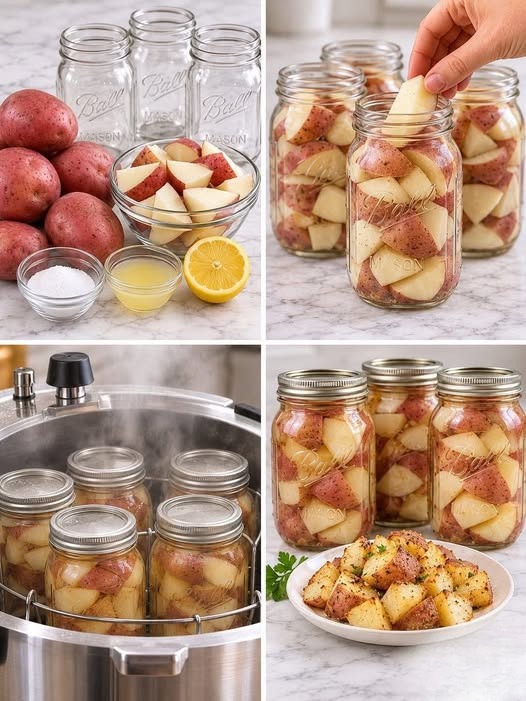
Description:
Imagine opening your pantry on a busy weeknight to find tender, velvety-soft potatoes infused with rich garlic, rosemary, and savory bone broth—ready to heat and eat in minutes. Unlike bland store-bought canned potatoes, these home-canned gems hold their firm, buttery shape while delivering deep, slow-simmered flavor. By swapping plain water for protein-rich bone broth and pairing them smartly with lean meats, this pantry staple makes building balanced, lower-carb-conscious, and high-protein meals effortless all year long.
Can This Pressure-Canned Herb & Bone Broth Potatoes Support Weight Loss Goals?
Yes, incorporating portion-controlled, bone-broth-infused potatoes into a balanced eating plan can be a practical tool for weight management. Boiled and pressure-cooked potatoes rank among the most satiating whole foods, helping you feel full on fewer calories while delivering slow-digesting energy rather than empty refined carbs. When paired with a primary lean protein source like grilled chicken or eggs, these pre-portioned jars eliminate last-minute takeout temptations and make calorie and macro tracking simple.
Does Pressure-Canned Herb & Bone Broth Potatoes Fit a High-Protein Lifestyle?
While potatoes are naturally a carbohydrate-focused whole food rather than a pure low-carb vegetable, canning them in collagen-rich beef or chicken bone broth boosts their protein profile and culinary versatility. Made with waxy Yukon Gold potatoes, garlic, herbs, and concentrated bone broth, each serving offers around 17 grams of net carbs alongside 6 grams of protein before you even add your main protein dish. They serve as an ideal, portion-controlled complex carb base to round out high-protein breakfasts, post-workout recovery bowls, and busy weeknight dinners.
My Personal Experience
-
Choosing Waxy Over Starchy Potatoes: The first time I pressure-canned russets, they turned into cloudy potato mush inside the jars; switching to firm Yukon Gold potatoes kept every cube intact and creamy.
-
Using Bone Broth Instead of Plain Water: Replacing standard canning water with seasoned chicken bone broth infused the potatoes all the way to the center and added an instant boost of savory protein.
-
Pre-Boiling Before Packing: Taking five minutes to parboil the cubed potatoes before hot-packing prevented starches from clouding the jars and ensured even heat penetration during pressure processing.
Perfect For:
-
High-Protein Breakfast Skillets: Drain a jar and crisp the cubes in a cast-iron skillet alongside egg whites, turkey sausage, and spinach for a fast morning hash.
-
Post-Workout High-Protein Meals: Pair a warmed serving with grilled steak, rotisserie chicken, or salmon to replenish muscle glycogen without heavy prep work.
-
Controlled-Carb & Macro-Tracked Meal Prep: Pre-measured pint jars take the guesswork out of portioning complex carbohydrates alongside high-protein mains.
-
Emergency Pantry Dinners & Camping Trips: Provides instant, shelf-stable comfort food that requires zero refrigeration until opened.
Why You’ll Love This Recipe:
-
Ultra-Fast Weeknight Prep: Having tender, pre-cooked potatoes waiting in your pantry cuts dinner preparation time down to under ten minutes.
-
Rich, Infused Flavor: Pressure-canning locks aromatic garlic, fresh rosemary, and savory bone broth directly into the potatoes so they need minimal seasoning when reheated.
-
Zero Waste Harvest Preservation: Turns a bulk bag of fresh potatoes into shelf-stable jars that stay fresh for over a year without sprouting in the pantry.
Common Mistakes to Avoid:
-
Using a Water Bath Canner Instead of a Pressure Canner: Potatoes are a low-acid food and strictly require a tested pressure canner to reach 240°F and prevent dangerous bacterial growth.
-
Using Floury Russet Potatoes: High-starch baking potatoes break down under high pressure, resulting in mushy texture and thick, cloudy liquid.
-
Skipping the Parboil Step (Raw Packing): Packing raw potatoes directly into jars causes uneven heating and excessive starch release; always hot-pack after a brief boil.
-
Leaving Potato Skins On: Potato skins harbor soil bacteria and become tough and papery during pressure canning, so always peel them thoroughly first.
Required Equipment:
-
Dial-Gauge or Weighted-Gauge Pressure Canner — safely reaches the high temperatures required to preserve low-acid vegetables.
-
7 Pint-Sized Mason Jars with New Two-Piece Lids — provides convenient single-meal portions with reliable vacuum seals.
-
Jar Lifter Tongs — lets you safely move scalding-hot jars in and out of the canner without tipping them.
-
Canning Funnel & Bubble Popper — keeps jar rims clean for a proper seal while removing trapped air pockets around the potatoes.
-
Large Stockpot — gives plenty of space to parboil cubed potatoes evenly before packing.
Storage Instructions:
-
Unopened Jars (Pantry): Store cooled, sealed jars with the screw bands removed in a cool, dark pantry (50°F–70°F) for up to 12 to 18 months.
-
Opened Leftovers (Refrigerator): Transfer any unused potatoes and broth to an airtight glass container and refrigerate for up to 4 days.
-
Opened Leftovers (Freezer): Drain the broth, spread cooled potato cubes on a parchment-lined tray to freeze solid, then transfer to a freezer bag for up to 2 months to prevent mushiness.
Recipe Details
-
Preparation Time: 25 minutes
-
Cooking Time: 35 minutes (plus canner pressurizing and depressurizing time)
-
Total Time: 1 hour 30 minutes
-
Servings: 7 pint jars (1 pint per serving)
-
Best Season for This Recipe: All-season (ideal for preserving late-summer/fall harvests to enjoy all winter long)
-
Total Calories (Per Serving): ~115 kcal (approximate estimate)
Turn bulk potatoes into ready-to-eat, savory pantry staples with this simple pressure-canning method. Infused with garlic, rosemary, and protein-rich bone broth, these tender Yukon Gold cubes hold their shape beautifully. Open a jar anytime for effortless high-protein breakfast hashes, quick dinner sides, and meal-prep bowls.
📝 Ingredients:
-
5 pounds (2.25 kg) Yukon Gold or red waxy potatoes (peeled and cut into uniform 1-inch cubes; avoid russets)
-
6 cups (1.4 liters) low-sodium chicken or beef bone broth (adds savory depth and boosts protein content; skim off excess surface fat before heating)
-
3.5 teaspoons canning or kosher salt (1/2 teaspoon per pint jar; avoid iodized table salt as it clouds the broth)
-
7 small cloves garlic, peeled (1 whole clove per jar)
-
7 small sprigs fresh rosemary or thyme (1 sprig per jar)
-
1/2 teaspoon freshly cracked black pepper (divided evenly among jars)
Directions:
-
Prep Jars and Canner: Wash 7 pint Mason jars, lids, and bands in hot soapy water. Place the jars in your pressure canner with 2 to 3 inches of simmering water over medium-low heat to keep them warm until ready to fill.
-
Parboil the Potatoes: Place the peeled, 1-inch cubed potatoes in a large stockpot, cover with fresh water, and bring to a boil over high heat. Boil gently for 2 minutes until the edges look slightly translucent, then drain completely in a colander.
-
Heat the Bone Broth: In a separate saucepan over medium heat, bring the bone broth to a steady simmer so it is piping hot when poured into the warm jars. (Tip: Skim any visible fat off the top of the broth so grease does not interfere with jar seals.)
-
Pack the Jars: Working one warm jar at a time, add 1/2 teaspoon canning salt, 1 peeled garlic clove, 1 herb sprig, and a pinch of black pepper to the bottom. Pack the hot parboiled potato cubes snugly into the jar, leaving 1 inch of headspace at the top.
-
Add Broth and Remove Bubbles: Ladle the simmering bone broth over the potatoes, maintaining 1 inch of headspace. Slide a non-metallic bubble popper or plastic spatula around the inside edge of the jar to release trapped air bubbles, adding a splash more hot broth if the level drops.
-
Wipe Rims and Seal: Wipe the glass jar rim thoroughly with a clean damp cloth dipped in white vinegar to remove any broth residue. Center a flat lid on the jar and screw on the metal band just until fingertip-tight.
-
Pressure Process: Place the filled jars on the rack inside the pressure canner. Lock the lid, turn the heat to high, and let steam vent steadily from the open vent pipe for 10 full minutes. Place the weight/regulator on the vent and bring the canner to 10 PSI (for weighted-gauge canners) or 11 PSI (for dial-gauge canners), adjusting for altitude if above 1,000 feet.
-
Time and Cool Naturally: Adjust the burner to medium or medium-low to maintain steady pressure and process pint jars for 35 minutes. Turn off the heat and allow the pressure gauge to return to 0 PSI completely on its own (about 30–40 minutes) without forcing it open. Wait 10 minutes after removing the weight, unlock the lid away from your face, and transfer jars to a towel-lined counter using jar tongs. Let cool undisturbed for 12 to 24 hours before checking seals.
Nutrition Facts (Per Serving – Approximate):
-
Calories: 115 kcal
-
Fats: 0.5g
-
Cholesterol: 0mg
-
Sodium: 480mg
-
Potassium: 540mg
-
Total Carbohydrates: 20g
-
Fiber: 3g
-
Net Carbs: 17g
-
Sugars: 1g
-
Protein: 6g
-
Calcium: 20mg
Notes:
-
Reheating & High-Protein Pairing: Drain the potatoes (saving the flavorful bone broth for soups or sauces) and pan-sear them in a non-stick or cast-iron skillet over medium-high heat for 5 minutes until golden and crispy, then crack 2–3 eggs directly into the pan or toss with pre-cooked shredded chicken breast.
-
Allergy Notes: Naturally gluten-free, dairy-free, nut-free, and egg-free; always verify that store-bought bone broth is certified gluten-free if cooking for celiac sensitivity.
-
Flavor Boosts: Swap rosemary for 1/4 teaspoon dried oregano and 1/4 teaspoon smoked paprika per jar, or use roasted bone broth for an even deeper umami finish.